Iris Network member Altruist – COVID19 response

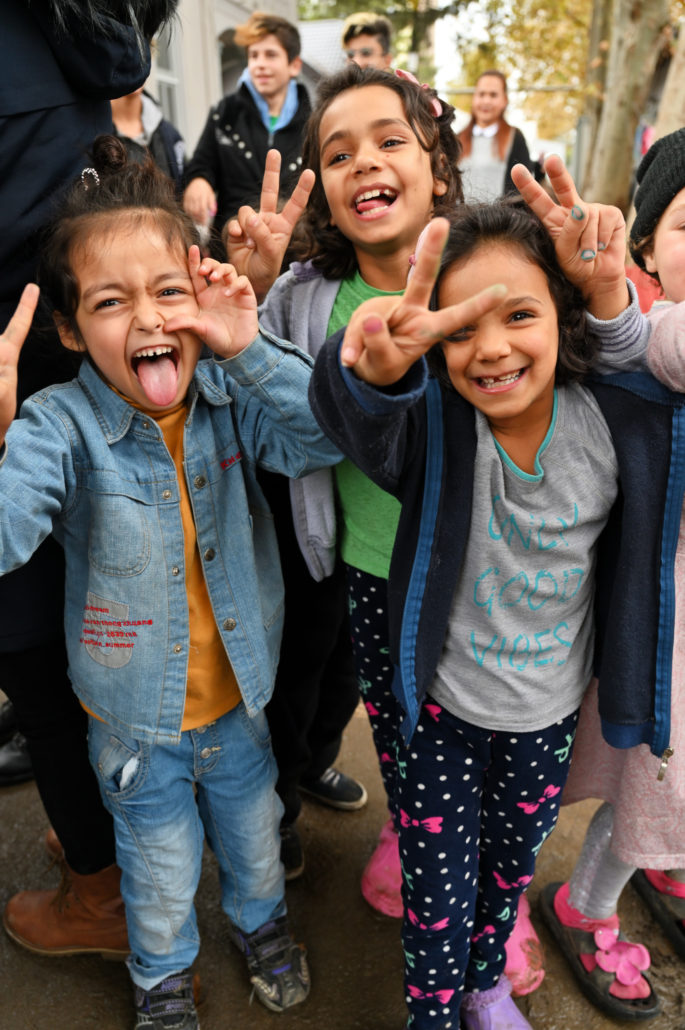
The Altruist Association works with children at risk and in the prevention of risky behaviors. They work in two locations, the Day Center and the Field Classroom in Bafo. Altruist program consists of working individually with a teacher, psychologist or social worker. They offer help with schoolwork or homework, as well as instructional instruction and also conduct creative educational workshops tailored to the needs of the children they work with. In addition, Altruist beneficiary are parents and entire families. They offer psychological counseling and support as needed. Due to the emergency due to the appearance of COVID – 19, the Day Center and the Field Classroom stopped working directly with the users on 12.3.2020. year, the day when the children also stopped going to school. The staff continued to work on the premises of the Center on the administrative part of the work, and on further planning of emergency work. After additional measures were introduced by the HNZ expert staff, it was decided that all staff would continue to work from home on the administrative part of the work, with regular meetings to plan work in the coming period, in extraordinary conditions. After the Day Center and Field Classroom stopped working directly with users, all Altruist activities were moved online and to social networks. All parents were personally contacted and informed that the Center would not continue to work with users on their premises, but that an alternative work plan was developed. It involves online communication via Viber messages or calls. Viber was chosen as a medium of communication because most of our users have access to it. Through Viber, parents can get the help they need in schoolwork, homework, or instructional instruction. A psychologist and / or social worker is also available to them in case of need for psychosocial support related to their or their children’s personal needs or directly related to a pandemic. Altruist also set up a Viber group where parents can ask for help with their children at school. The group was formed with the aim of creating a common database of all tasks that were done with children, but also because of the possibility of connecting our users with each other. In addition, all additional information and announcements of some events, marking important dates throughout the month can be followed by users on social networks (Facebook). It is important to emphasize that the Viber Group is made with parents, not children, to activate and involve parents in working with children and to avoid the overuse of cell phones in children.

Altruist users responded positively to the alternative work plan and immediately accepted it. Already after the first contact, customers have accepted the new mode and started working with our staff. The collaboration is mostly related to schoolwork and homework, as the school is currently held online. As for psychological counseling over the phone, there was some adjustment time. Most of the parents called because of problems with school materials, and often these conversations would turn into counseling. Given the new situation, they have recognized that parents also need counseling on how to organize the day, how to motivate their children to work and listen to school material from home, and to fulfill all their school responsibilities. Parents also have the problem of maintaining discipline at home and devising activities for children. In addition, by keeping in touch with parents, Altruist can also monitor how they cope with the situation and whether they need additional help or some intervention. Currently, parents respond well to this type of counseling and are more relaxed in seeking our help. With this mode of work, they are in constant direct communication with beneficiaries , actively cooperating and receiving constant feedback on Altruist work, on the basis of which we then plan further activities and activities. Their activities related to marking significant dates of the year and educational and creative workshops conducted on a weekly basis cannot be maintained until we start working with customers at our Center. However, they have postponed all of planned activities, and they are developing a plan for when and how they will be reimbursed and implemented. In addition, Altruist users of the Bafo Resort Classroom are mostly socially disadvantaged families. At present, material assistance is a priority, as many users are left unaccepted in this situation. On this basis, in addition to online communication, we work to secure funds and donations to provide material assistance to our vulnerable customers. For now, Altruist alternative work plan is working and they have received a positive reaction from beneficiaries . It is important to emphasize that the expert team is in constant communication with each other and adjusts the work plan according to the feedback received from parents and children.

Zemlja djece BIH – COVID19 adaptation of activities

In the situation of the Covid-19 pandemic crisis, Iris Network member, Zemlja djece u BIH (Land of Children in BiH) reorganized the work of the Association in accordance with the measures of the relevant crisis authorities. Although “work from home” is one of the intensively used options, in all situations where this is possible, very intensive field work is still taking place through mobile teams, which, while respecting all applicable measures, provide humanitarian support the most vulnerable categories. Thus, families with children in which both parents are unemployed (more than 150), otherwise beneficiaries of the Day Care Center for street children and children at risk, are provided with a food and hygiene package, and continuous assistance in food, protective equipment and other non-food items. it is also provided for juvenile migrants from the East who occurred in Tuzla during the pandemic crisis. The complete restriction of group activities with children and women is sought to be overcome through the use of information technology. The contents of promoting healthy lifestyles are broadcast in collaboration with a local broadcaster, while the gender-transformative program for adolescents has been successfully transformed through the use of online platforms and social networks. Our “Be a Men Club” not only designs successful pandemic prevention content, it also organizes online peer counseling on crisis and related occurrences for all adolescents in need. Also, the volunteers of the Association have been very actively involved in the wider local initiative “Street Heroes” to help older fellow citizens.

LEDA Development Association – COVID19 reaction

Iris Network member, LEDA Development Association Due to the new situation with COVID-19 LEDA suspended fieldwork, complying with measures to prevent the spread of the infection. Theirs primary users are pre-school children and they communicate with children and families via telephone and online platforms. It is very important that LEDA follow the instructions and keep our contacts to a minimum, and again find a way to keep their users from being ignored. Because they are prevented from working in the field and supporting little ones in kindergartens, their hardworking online educators encourage little ones to spend time in isolation more easily and with more fun. They make fun games for them, and the children, on the other hand, kids are happy to send their work to LEDA. The least LEDA can do is post them on website, thus stimulating other parents to spend time at home in a fulfilled way. As an organization, LEDA are at the disposal of its users, and thay can gladly be mediators when it comes to assistance packages or other assistance to the socially vulnerable categories. LEDA: “Stay at home, everything will be fine.”

IRIS Network survey for CSO’s: Social services – Covid19 pandemic

IRIS Network considers important to assess the situation, challenges and difficulties its members as well as others CSO’s that are facing in the provision of social services and their everyday work as a result of the current COVID 19 pandemic.

We have responsibility towards its members as well as to other parties to have a detailed overview of their current situation and to provide this information to the EC, as the donor. This will be conducted through a questionnaire CSO’s can fill in on link below.

Therefore, the objective of the questionnaire is to assess the current situation and consequences caused by COVID 19 pandemic on the provision of social services to beneficiaries provided by IRIS Network members in their local communities. The results of the questionnaire will be used for developing a Report on Social Services in South East Europe under the COVID 19 pandemic and will include the following countries: Albania, Bosnia and Herzegovina, Montenegro, Serbia and North Macedonia. The Report will be used to assess the actual challenges that civil society organizations providers of social services face in working with beneficiaries and to map the assistance models.

The Report will also be used as an instrument in advocating for policies and measures of national/regional/ EU Institutions which focus on service providers during and after the crises.

Please provide detailed information in the questionnaire and include all information you consider relevant. Also, please include your projections and the assessment of the consequence caused by the crises that will affect your services and the whole social protection system.

For all interested CSO’s providing social services – you can fill in the questioner on the link below .

https://docs.google.com/forms/d/e/1FAIpQLScYtxkZHFt2ZdZ89_F-IVVyIDYzH3bxToH4T5ybdcNrnLgQoA/viewform?usp=sf_link

Please feel free to contact us through National Coordinators and / or Network Secretariat.

Stay well and healthy.

IRIS Balkan Media Caravan on the way through the migrants route

After 6 days of visiting refugee camps along migrants route in Macedonia, Serbia and BIH, we concluded the Balkan Media Caravan, an initiative of IRIS network which was held from 3rd – 8th of November. The event was organized by IDC Serbia and ASB South East Europe, with support of national partners.

The aim of the caravan was to enhance human, sensitive and objective reporting on migrations in the region by increasing the level of knowledge and information among journalists.

The caravan gathered 20 young journalists of reputable national and local radio stations, television, newspapers and digital media on the 6-day training aimed at sensitization of reporting about migrants and refugees while tackling the topics of integration of migrants and reintegration of returnees into the society.

The Media Caravan included trainings, workshops, lectures from human rights defenders and journalists from the region and field visits to refugee camps in North Macedonia, Serbia and Bosnia and Herzegovina, with the possibility to conduct interviews with migrants in these countries.

Participants were journalists from media outlets in Albania, Montenegro, North Macedonia, Serbia and BIH.

During the Caravan, the journalists had a task to produce, as an output of the Media Caravan, up to 15 reports in their media outlets, which have been prepared under the guidance of experienced trainers-journalists and which have been published and broadcasted by journalists in their media outlets.

Besides training and field visits to migrant reception and transit camps in 3 countries the journalists had an opportunity to meet local CSOs providers of social services to migrants/refugees/returnees and the representatives from local health institutions.


The Balkan Media Caravan had high coverage during the trip and afterwards.

Participants were from different national and regional media outlets, covering all together more than 10 million people in Western Balkans countries:

1.            Radio Television Serbia

2.            Radio Television Bosnia and Herzegovina

3.            Radio Television  Montenegro

RTCG NVO Sektor – Balkan Medija Karavan

4.            Radio Television Albania

5.            Regional television N1 (Belgrade, Sarajevo, Zagreb)

N1 u kampovima Tabanovci i Vranje – Balkan Medija Karavan

6.            TV Alsat M North Macedonia

Alsat M on Balkan Media Caravan

7.            TV Clab TV Albania

8.            Radio MOF North Macedonia

Radio MOF on Balkan Media Caravan

9.            Daily newspaper Danas Serbia

Migranti od Avganistana do Severne Makedonije

10.          Daily newspaper Nezavisne novine Bosnia and Herzegovina

11.          Weekly newspaper Monotor Montenegro

BALKANSKA RUTA, PUT MIGRANATA KA EVROPI (II) – KAMPOVI U BOSNI I HERCEGOVINI: Zaglavljeni u beznađu

12.          National Agency FoNet Serbia

13.          Web media Faktor Albania

Up till now, 23 reports were produced and broadcasted regarding Caravan and migrants crisis on Balkan route: 10 TV, 8 printed, 1 radio, 3 agency and 1 web reports.

Additional to this, reach was increased by posting all reports that were produced in traditional media on their web sites, Facebook and Twitter pages, increasing also the frequency of the event and closely influencing on the our target group.

Over 7million people were potentially reached through broadcasting TV reports, with additional reach of almost 500,000 people trough newspapers, web and radio publications. Campaign on Facebook, Twitter, YouTube and Instagram brought us reach over 200,000, so we can easily say that IRIS Media Caravan media outputs potentially reached over 7,5 million people across the Western Balkan countries.

***

20 journalists from 5 countries spent 6 days on the caravan visiting 3 countries, 7 migrant camps and 10 CSOs providers of social services for migrants along the route

Balkan media caravan is organized in the framework of the project ” IRIS networking CSOs for protection sensitive migration management”, implemented by IDC Serbia in cooperation with partners ASB South East Europe, LIR CD, SOS Podgorica, Отворена Порта – Open Gate: La Strada, North Macedonia, and Nisma për Ndryshim Shoqëror, ARSIS Albania

Project is funded by the European Commission.

PAL Call for Participants North Macedonia

For International Week 2020: Innovation in Humanities and Social Science

Date: 17 – 21 February 2020

Organizer: Faculty of Philosophy Skopje, North Macedonia

Peer Review Instrument


The project IRIS NETWORKing – CSOs for protection sensitive migration management is implemented by Initiative for Development and Cooperation (IDC) in partnership with The Initiative for Social Change Arsis – National Coordinator for IRIS Network Albania, LIR CD – National Coordinator for IRIS Network Bosnia and Herzegovina, La Strada – National Coordinator for IRIS Network North Macedonia, SOS Telephone – National Coordinator IRIS Network Montenegro and ASB – General Secretariat Serbia. One of the project activities is Peer Review Instrument within which Peer Review Reports will be prepared.

The aim of the instrument is to enhance regional know-how exchange between CSOs dealing with provision of social services to vulnerable groups, including migrants, and to support focused peer-to-peer exchange. The Peer Review Reports will lead to innovative recommendations on how to combine existing practices. The mechanism is to strengthen CSOs IRIS Network members in building monitoring capacities for social service provision.

International Week 2020 Innovation in Humanities and Social Science


The Faculty of Philosophy in Skopje (North Macedonia) is the organizer of International Week 2020 Innovation in Humanities and Social Science that will promote the exchange of ideas and critical discussions between participants and lecturers related to the topic of ‘Innovation in Humanities and Social Science’. The five day event will include lectures, presentations and facilitated discussions in which both lecturers and participants will contribute.

Applications from participants involved in psychology, sociology, social policy and social work are welcome.

Selection of participants – CSOs IRIS Network members

IRIS Network members (staff members and/or volunteers) from the following countries can apply: Albania, Bosnia and Herzegovina, Montenegro, North Macedonia and Serbia.

Excellent command and understanding of the English language is a precondition for the application as English will be the working language.

The participants should:

  • Be engaged in an organization IRIS Network member
  • at least 3 years of active involvement and proven experience in CSOs and in the area of migration management and social policy
  • Proven familiarity with social and migration policies
  • Motivated to increase professional capacity and knowledge in areas covered by the International Week 2020
  • Demonstrated interest to increase quality standards of social services provided by his/her organization or to introduce new services
  • Open to new practices and willingness to implement them in his/her organization
  • Possibility to transfer gained knowledge and experience into policies and everyday work of his/her organization
  • Experience in conducting analysis and preparing similar Reports


Participant’s obligations

Following the International Week 2020 each of the selected participants IRIS Network members will be obliged to prepare a Peer Review Report on issues relevant for their organization and professional development based on one of the topics covered during the International Week 2020. The Participants will be obliged to submit the Peer Review Reports no later than February 28, 2020 to iris@iris-see.eu.

Participation in International Week 2020 is free of charge for those participants selected through the Call. The participants will receive board and accommodation free of charge, travel will be organized and costs covered by IRIS Network.

APPLICATION PROCEDURE


The deadline for applications is October 31, 2019 at 5 p.m. Only selected candidates will be contacted.

If you are interested to participate in the event and are willing to prepare the Peer Review Report, please send the following documents/information in English, to Jelena Leskovac at iris@iris-see.eu and Stojne Atanasovska Dimishkovska at stojne@lastrada.org.mk)

  1. A short CV in Europass format
  2. 1 page cover / motivation letter clearly stating your motivation and objectives/learning outcome from attending the International Week 2020 and what you expect to achieve through attending; in the cover letter the applicant should indicate in which topic(s) covered he/she is most interested in.
  3. Recommendation Letter from your current employer – IRIS Network member

International Week 2020 starts on February 17 and ends on February 21, 2020.

Based on criteria indicated in the Call and submitted applications, in total six (6) participants will be selected.

Assessment of applications

The assessment of applications (in order to be placed on the shortlist) will be based on the application submitted by the candidate. Please clearly indicate in the motivation letter of your application:

  • How the International Week 2020 will impact your professional capacities and your organization’s

Selected participants will receive a fee for covering travel, accommodation and meals during the duration of the International Week 2020. Each participant will be responsible for organizing travel, accommodation and meals.

Int Week 2020, List of speakers

Extended deadline for application for IRIS Networking Media Caravan

Application deadline: October 11th, 2019.

In the framework of the EU-funded project IRIS NETWORKing CSOs for protection sensitive migration management, implemented by Development and Cooperation (IDC) in cooperation with partners ASB South East Europe, LIR CD BiH, La Strada-Open Gate Republic of North Macedonia, Initiative for Social Change ARSIS Albania and SOS TELEPHONE Montenegro, a Media Caravan for 20 journalists from media outlets in Western Balkans (WB) will be organised.

The Media Caravan will be organized October 27 – November 1, 2019 (indicative date).   

About the Media Caravan

The European migrant crisis, since its beginning in 2015, has been marked by a trend of portraying the migrants in a negative light which is often manifested as racism or xenophobia. Unfortunately, this type of rhetoric is not limited to just one country but has become dominant on the European level. Media in WB failed to provide detailed and reliable information about the refugee crisis because of stretched editorial resources and due to the lack of presence of well-informed journalists able to provide in-depth and sensitive reporting. Moreover, reports about refugees and migrants were coloured by hyperbole and intolerance and confusion over what are the correct terms to use to describe migrants, refugees and asylum-seekers. Even though major reduction in migrant numbers in countries along the WB Route led to fewer headlines on this topic in Serbia, North Macedonia and Bosnia and Herzegovina “horror stories” about refugees and migrants are still very present. Such stories are transferred to the other media outlets in the region. The predominant negative picture of the “villain migrant” can be changed in the perception of the general public by using various channels – from the traditional media through social media.

The overall objective of Balkan Media caravan “Migration in Journalism” is to shift the prevailing perception that each and every migrant is automatically a criminal and to point out that they are human beings that have to be treated with respect and have certain rights that must not be broken. The caravan will gather 20 young journalists of reputable national and local radio stations, television, newspapers and/or digital media on the 6-day training aimed at sensitization of reporting about migrants and refugees while tackling the topics of integration of migrants and reintegration of returnees into the society.

The Media Caravan will include training/workshops/lectures from human rights defenders and journalists from the region and field visits to refugee camps in North Macedonia, Serbia and Bosnia and Herzegovina, with the possibility to conduct interviews with migrant/refugee /returnees in these countries.

Main topics that will be cowered during the training/workshops/lectures, amongst all are the following: 1) Who is refugee, migrant, IDP and returnee? Why is term illegal immigrant not correct? 2) Human rights issues arising in the context of mix migration; 3) Ethic in journalism: Hate speech and challenges in modern journalism; 4) Quality reporting on migration: Creating moving stories and covering sensitive issues; 5) Reinforce freedom of expression and equality in the media etc.

Participants will be journalists from media outlets in Albania, Montenegro, North Macedonia, Serbia and B&H.

The Media Caravan will last 6 days and will be organised in North Macedonia, Serbia and BiH. 

The Media Caravan will start in Macedonia and will travel to Serbia and BiH. Participants / journalists will have the opportunity to produce appealing stories during the event. The participants / journalists will prepare, as an output of the Media Caravan, up to 15 reports in their media outlets, which will be prepared under the guidance of experienced trainers/journalists and which will be published/broadcasted by journalists in/on their media outlets.

Besides training and field visits to migrant reception and transit camps in 3 countries the participants / journalists will have an opportunity to meet local CSOs providers of social services to migrants/refugees/returnees and meeting with the representatives from local health institutions.

What does IRIS Network expect from you?

  • Willingness to learn about migrant management in Western Balkan
  • Need to increase professional capacity in the area of migrant management, integration of vulnerable groups, with focus migrants/refugees/returnees
  • Conduct interviews and prepare reports/article/reportage during visits to migrant camps which will contribute to social integration of migrants/refugees/returnees into local communities
  • Up to 15 media outputs need to be prepared by Media Caravan participants or minimum 2 media outputs per participant
  • A proactive attitude

Education, key skills and competences of applicants

  • High school diploma required, BA/MA in journalism/political science/law will be seen as an advantage
  • Good command of English
  • Proven track record in covering social and/or migration issues
  • Familiar with migrant management in Western Balkans
  • Proven experience as a journalist in a media outlet in Western Balkan countries (print/electronic/online)
  • Young journalists up to 35 years of age, however journalists above this age are also welcome as participants

Please note that this call is exclusively open for media operating in Western Balkans (Albania, North Macedonia, Serbia, Bosnia and Herzegovina and Montenegro).

How to apply

If you are interested in participating in the Media Caravan please send:

  • your CV in Europass format
  • 1 page cover letter that clearly states your motivation and your objectives/learning outcomes following the Media Caravan
  • Recommendation Letter from your current employer – media outlet

to Sanja Vukelic at sanja.vukelic@asb-see.org and cc to Jelena Leskovac at iris@iris-see.eu by October, 11th 2019

Assessment of applications

The assessment of applications (in order to be placed on the shortlist) will be based on the application submitted by the candidate. Please clearly indicate in the motivation letter of your application:

  • How the Media Caravan will impact your professional capacities and your media outlet’s

Terms and conditions

The following costs will be covered during the 6 day Media Caravan:

  • Travel costs
  • Accommodation costs
  • Meals (3 meals per day)
  • Health insurance

The participants will cover by themselves costs that are not indicated above.

IRIS Networking Media Caravan

In the framework of the EU-funded project IRIS NETWORKing CSOs for protection sensitive migration management, implemented by Development and Cooperation (IDC) in cooperation with partners ASB South East Europe, LIR CD BiH, La Strada-Open Gate Republic of North Macedonia, Initiative for Social Change ARSIS Albania and SOS TELEPHONE Montenegro, a Media Caravan for 20 journalists from media outlets in Western Balkans (WB) will be organised.

The Media Caravan will be organized October 27 – November 1, 2019 (indicative date).   

About the Media Caravan

The European migrant crisis, since its beginning in 2015, has been marked by a trend of portraying the migrants in a negative light which is often manifested as racism or xenophobia. Unfortunately, this type of rhetoric is not limited to just one country but has become dominant on the European level. Media in WB failed to provide detailed and reliable information about the refugee crisis because of stretched editorial resources and due to the lack of presence of well-informed journalists able to provide in-depth and sensitive reporting. Moreover, reports about refugees and migrants were coloured by hyperbole and intolerance and confusion over what are the correct terms to use to describe migrants, refugees and asylum-seekers. Even though major reduction in migrant numbers in countries along the WB Route led to fewer headlines on this topic in Serbia, North Macedonia and Bosnia and Herzegovina “horror stories” about refugees and migrants are still very present. Such stories are transferred to the other media outlets in the region. The predominant negative picture of the “villain migrant” can be changed in the perception of the general public by using various channels – from the traditional media through social media.

The overall objective of Balkan Media caravan “Migration in Journalism” is to shift the prevailing perception that each and every migrant is automatically a criminal and to point out that they are human beings that have to be treated with respect and have certain rights that must not be broken. The caravan will gather 20 young journalists of reputable national and local radio stations, television, newspapers and/or digital media on the 6-day training aimed at sensitization of reporting about migrants and refugees while tackling the topics of integration of migrants and reintegration of returnees into the society.

The Media Caravan will include training/workshops/lectures from human rights defenders and journalists from the region and field visits to refugee camps in North Macedonia, Serbia and Bosnia and Herzegovina, with the possibility to conduct interviews with migrant/refugee /returnees in these countries.

Main topics that will be cowered during the training/workshops/lectures, amongst all are the following: 1) Who is refugee, migrant, IDP and returnee? Why is term illegal immigrant not correct? 2) Human rights issues arising in the context of mix migration; 3) Ethic in journalism: Hate speech and challenges in modern journalism; 4) Quality reporting on migration: Creating moving stories and covering sensitive issues; 5) Reinforce freedom of expression and equality in the media etc.

Participants will be journalists from media outlets in Albania, Montenegro, North Macedonia, Serbia and B&H.

The Media Caravan will last 6 days and will be organised in North Macedonia, Serbia and BiH. 

The Media Caravan will start in Macedonia and will travel to Serbia and BiH. Participants / journalists will have the opportunity to produce appealing stories during the event. The participants / journalists will prepare, as an output of the Media Caravan, up to 15 reports in their media outlets, which will be prepared under the guidance of experienced trainers/journalists and which will be published/broadcasted by journalists in/on their media outlets.

Besides training and field visits to migrant reception and transit camps in 3 countries the participants / journalists will have an opportunity to meet local CSOs providers of social services to migrants/refugees/returnees and meeting with the representatives from local health institutions.

What does IRIS Network expect from you?

  • Willingness to learn about migrant management in Western Balkan
  • Need to increase professional capacity in the area of migrant management, integration of vulnerable groups, with focus migrants/refugees/returnees
  • Conduct interviews and prepare reports/article/reportage during visits to migrant camps which will contribute to social integration of migrants/refugees/returnees into local communities
  • Up to 15 media outputs need to be prepared by Media Caravan participants or minimum 2 media outputs per participant
  • A proactive attitude

Education, key skills and competences of applicants

  • High school diploma required, BA/MA in journalism/political science/law will be seen as an advantage
  • Good command of English
  • Proven track record in covering social and/or migration issues
  • Familiar with migrant management in Western Balkans
  • Proven experience as a journalist in a media outlet in Western Balkan countries (print/electronic/online)
  • Young journalists up to 35 years of age, however journalists above this age are also welcome as participants

Please note that this call is exclusively open for media operating in Western Balkans (Albania, North Macedonia, Serbia, Bosnia and Herzegovina and Montenegro).

How to apply

If you are interested in participating in the Media Caravan please send:

  • your CV in Europass format
  • 1 page cover letter that clearly states your motivation and your objectives/learning outcomes following the Media Caravan
  • Recommendation Letter from your current employer – media outlet

to Sanja Vukelic at sanja.vukelic@asb-see.org and cc to Jelena Leskovac at iris@iris-see.eu by October, 9th 2019

Assessment of applications

The assessment of applications (in order to be placed on the shortlist) will be based on the application submitted by the candidate. Please clearly indicate in the motivation letter of your application:

  • How the Media Caravan will impact your professional capacities and your media outlet’s

Terms and conditions

The following costs will be covered during the 6 day Media Caravan:

  • Travel costs
  • Accommodation costs
  • Meals (3 meals per day)
  • Health insurance

The participants will cover by themselves costs that are not indicated above.

Second Regional Social Academy of IRIS Network

Second Regional Social Academy “Social Enterprises – An Innovative Model for sustainable service delivery and integration of marginalized groups in the labour market and society” was held from 27 – 30 May 2019. in Tirana. Under the framework of IRIS Networking CSOs for protection sensitive migration management, project is funded by European Commission and implemented through joined forces of 6 NGOs from 5WB countries: IDC Serbia, ASB South East Europe, SOS Podgorica, LIR Civil Society from B&H, ARSIS Albania and La Strada North Macedonia

Summary of our 4 day journey you can see in video below

Call for Applications for Western Balkans Policy Analysis Laboratory School in Montenegro

The project IRIS NETWORKing – CSOs for protection sensitive migration management is announcing Call for Peer Reviewers who will participate in the Western Balkans Policy Analysis Laboratory (PAL) School organized by The Future of the Welfare State in the Western Balkans Network on welfare issues, which will take place in Montenegro (Budva, Bečići) from 21 to 25 October 2019. Center for Social Policy (Belgrade, Serbia), member of the Western Balkans Network, is in charge of organizing PAL School.

One of the project activities is Peer Review Instrument within which Peer Review Reports will be prepared. The aim of the instrument is to enhance regional know-how exchange between CSOs dealing with provision of social services to vulnerable groups, including migrants, and to support focused peer-to-peer exchange. The Peer Review Reports will lead to innovative recommendations on how to combine existing practices. The mechanism is to strengthen CSOs IRIS Network members in building monitoring capacities for social service provision.

The PAL School is aimed at mid-level career professionals working in the social sectors either as policy and decision makers, service providers (from the state, NGO and private sectors), administrators, activists, advocates, think tank analysts, researchers, lecturers or service users from across the Western Balkan countries. The official language of the Policy Analysis Laboratory is English.

The deadline for applications is 30 August 2019 at 17 p.m. Only selected candidates will be contacted.

If you are interested to participate in the event and are will to prepare the Peer Review Report, please send the following documents/information in English, to email: iris@iris-see.eu

  1. A short CV in Europass format
  • 1 page cover / motivation letter clearly stating your motivation and objectives/learning outcome from attending PAL and what you expect to achieve through attending; in the cover letter the applicant should indicate in which of the three topics covered within the PAL School he/she is most interested in. Rank your first and second choices of PAL streams (we cannot guarantee that everyone will be placed in their first-choice stream)
  • Recommendation Letter from your current employer – IRIS Network member

The PAL School starts on October 21, 2019 in the afternoon, after the arrival of the participants and ends on October 25, 2019.

Based on criteria indicated in the Call and submitted applications, in total seven (7) participants will be selected.

More information about PAL School and application you can find HERE.

Agenda of the Policy Analysis Laboratory School you can find HERE.